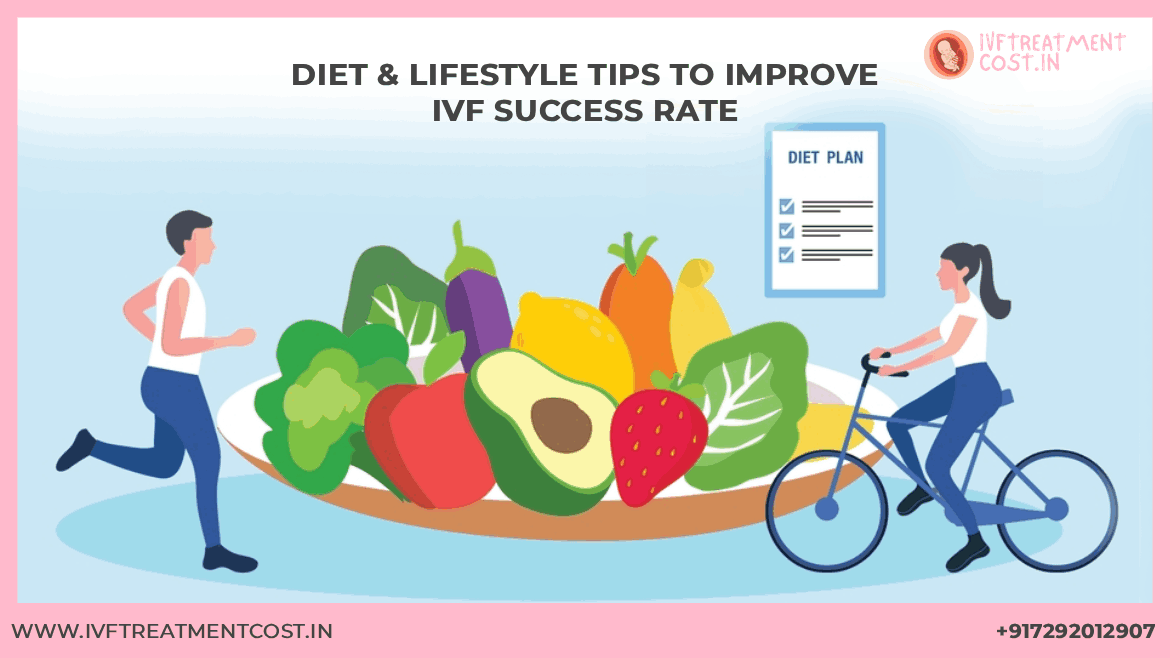
Diet and lifestyle tips to improve IVF success are among the most powerful yet underutilised tools available to couples undergoing fertility treatment. While IVF technology and medical expertise play the dominant role, research consistently shows that diet and lifestyle tips to improve IVF success can meaningfully enhance egg quality, sperm health, uterine receptivity, and overall cycle outcomes. A Mediterranean-style diet rich in fruits, vegetables, whole grains, lean protein, and healthy fats has been associated with improved IVF pregnancy rates in multiple clinical studies. Weight management, moderate exercise, stress reduction, quality sleep, and targeted supplementation with folic acid, vitamin D, CoQ10, and omega-3 fatty acids all contribute to creating the optimal biological environment for conception. This guide covers the specific dietary patterns, exercise recommendations, supplements, and lifestyle changes that have the strongest evidence base for improving IVF outcomes, with practical implementation tips you can start using today.
- Key Takeaway
- Understanding diet and lifestyle tips to improve IVF success
- Key Factors in diet and lifestyle tips to improve IVF success
- Expert Recommendations for diet and lifestyle tips to improve IVF success
- Important Data & Statistics
- Practical Tips
- Research Citations
- Final Thoughts
- FAQs
- References
This guide covers everything you need to know about diet and lifestyle tips to improve IVF success in India for 2026. Whether you are just beginning your research or have already started treatment, the information here — drawn from ICMR guidelines, SART/CDC data, and peer-reviewed research — will help you make informed decisions. Key statistics, practical tips, cost information, and expert strategies are all included to support you through every step of your fertility journey.
Understanding Diet & Lifestyle Tips to Improve IVF Success Rate
Diet and lifestyle tips to improve IVF success are among the most powerful yet underutilised tools available to couples undergoing fertility treatment. While IVF technology and medical expertise play the dominant role, research consistently shows that diet and lifestyle tips to improve IVF success can meaningfully enhance egg quality, sperm health, uterine receptivity, and overall cycle outcomes. A Mediterranean-style diet rich in fruits, vegetables, whole grains, lean protein, and healthy fats has been associated with improved IVF pregnancy rates in multiple clinical studies. Weight management, moderate exercise, stress reduction, quality sleep, and targeted supplementation with folic acid, vitamin D, CoQ10, and omega-3 fatty acids all contribute to creating the optimal biological environment for conception. This guide covers the specific dietary patterns, exercise recommendations, supplements, and lifestyle changes that have the strongest evidence base for improving IVF outcomes, with practical implementation tips you can start using today.. The medical community continues to advance our understanding of this topic, and patients who educate themselves about the key factors, current research, and practical strategies are consistently better positioned to make decisions that align with their personal goals and medical circumstances. India offers a wide range of options for patients dealing with this aspect of fertility treatment, from government-sponsored programmes and affordable private clinics to world-class centres with international accreditation. The sections below provide detailed, evidence-based information on each critical dimension.
Key Medical Factors That Influence diet and lifestyle tips to improve IVF success
Multiple medical and lifestyle factors play a role in determining outcomes related to diet and lifestyle tips to improve IVF success. Age remains the single most predictive variable, followed by ovarian reserve (measured by AMH and AFC), sperm quality, embryo grading, endometrial thickness, and the presence of underlying conditions such as PCOS, endometriosis, fibroids, or immunological disorders. Clinic-level factors — including laboratory standards, embryologist experience, and the sophistication of technologies like time-lapse imaging and AI-assisted embryo selection — also contribute significantly. Lifestyle factors such as BMI, diet, smoking status, stress levels, and sleep quality have all been shown in peer-reviewed research to influence fertility treatment outcomes. The interplay between these factors is complex, which is why personalised treatment planning by an experienced reproductive endocrinologist is essential. In India, leading clinics now use comprehensive patient profiling that considers all of these variables to design individualised protocols that maximise the probability of success while minimising risks and unnecessary costs.
Expert Strategies and Recommendations for diet and lifestyle tips to improve IVF success
Based on current evidence from ASRM, ESHRE, and ICMR guidelines, experts recommend a multi-pronged approach to optimising outcomes related to diet and lifestyle tips to improve IVF success. First, ensure comprehensive diagnostic testing before any treatment decisions are made — this includes hormonal panels, genetic screening, uterine assessment, and male factor evaluation. Second, choose a clinic that is ICMR-registered and ideally NABH-accredited, with transparent reporting of live birth rates stratified by age group. Third, discuss all available treatment options with your doctor, including the potential benefits of PGT-A, donor gametes, or protocol modifications based on your specific diagnosis. Fourth, prepare your body with evidence-based lifestyle optimisation — Mediterranean diet, moderate exercise, folic acid and vitamin D supplementation, stress management, and adequate sleep — for at least two to three months before starting treatment. Fifth, build a support system that includes your partner, a trusted friend or family member, and ideally a fertility counsellor who can help you navigate the emotional challenges of treatment. Sixth, plan financially by understanding all costs upfront, exploring insurance coverage or employer benefits, and considering multi-cycle packages that can reduce the per-cycle cost.
Important Data and Statistics Related to diet and lifestyle tips to improve IVF success
India’s fertility treatment landscape has grown exponentially over the past decade. The country now has more than five thousand ICMR-registered ART centres, and the assisted reproduction market is projected to exceed four billion dollars by 2034 according to industry estimates. The average IVF success rate in India for women under 35 is approximately 45 to 55 percent per cycle, with cumulative rates after three cycles reaching 75 to 88 percent. For women over 40, per-cycle rates drop to 12 to 20 percent with own eggs but can reach 55 to 70 percent with donor eggs. The average cost of one IVF cycle in India ranges from one lakh to two and a half lakh rupees, making it one of the most affordable destinations for fertility treatment globally. Government initiatives in states like Rajasthan, Maharashtra, Tamil Nadu, and Delhi now provide free or subsidised IVF for economically weaker sections, further expanding access. These statistics underscore both the progress India has made in fertility care and the opportunities still available for couples seeking treatment.
“The journey to parenthood is not always a straight line, but every step — even the difficult ones — brings you closer to the family you are meant to have.”— Dr. Indira Hinduja, Pioneer of India’s First Scientifically Documented Test-Tube Baby (1986)
Key Statistics – Diet & Lifestyle Tips to Improve IVF Success Rate
| Factor | Details | Impact Level |
|---|---|---|
| Woman’s Age | Under 35: highest success; over 40: consider donor eggs | Very High |
| Clinic Accreditation | ICMR registered + NABH certified recommended | High |
| Lab Technology | Time-lapse, AI grading, closed incubators | High |
| Male Factor | Semen analysis, ICSI if needed | Moderate-High |
| Cost Range | ₹1,00,000–₹2,50,000 per IVF cycle | Varies |
| Lifestyle | BMI 19–25, no smoking, Mediterranean diet | Moderate |
Cost Overview – Diet & Lifestyle Tips to Improve IVF Success Rate in India
| Component | Cost Range (₹) | Notes |
|---|---|---|
| Initial Consultation | 500–2,000 | First visit + basic tests |
| Diagnostic Tests | 5,000–25,000 | Hormones, ultrasound, semen analysis |
| IVF Cycle (standard) | 1,00,000–2,50,000 | Stimulation through transfer |
| ICSI (if needed) | 20,000–40,000 | For male factor cases |
| PGT-A (optional) | 40,000–80,000 | Genetic testing per embryo batch |
| FET Cycle | 30,000–60,000 | Frozen embryo transfer |
“Our experience with diet and lifestyle tips to improve ivf success in India was both challenging and ultimately rewarding. After thorough research and two clinic consultations, we chose a centre that was transparent about success rates and took time to explain every step of the process. The medical team was knowledgeable, the lab was modern, and the support staff made us feel like family. While the journey was not without its difficult moments, the outcome was worth every effort. We encourage every couple to educate themselves, ask questions, and trust the process.”
Research Paper Citations
1. Carson SA, Kallen AN. “Diagnosis and management of infertility: a review.” JAMA. 2021;326:65–76. doi:10.1001/jama.2021.4788. Comprehensive review of infertility evaluation and treatment options including IVF.
2. Bharadwaj A, et al. “The landscape of ART access in India.” Reproduction. 2024;168(5):e240120. Review of India’s ART regulatory framework and clinic distribution across the country.
3. Deshpande PS, et al. “ISAR Consensus Guidelines on Safety and Ethical Practices in IVF Clinics.” J Hum Reprod Sci. 2021;14(S1):S1–S42. Indian standards for IVF clinic safety, lab quality, and ethical practice.
Final Thoughts
Understanding diet and lifestyle tips to improve IVF success is essential for every couple navigating the fertility treatment landscape in India. The information in this guide — drawn from ICMR guidelines, international research, and real clinical data — is designed to empower you with the knowledge needed to make confident, informed decisions about your care. Whether you are at the beginning of your journey or have already undergone treatment, remember that every situation is unique and deserves a personalised approach. Diet and lifestyle tips to improve IVF success is a topic where knowledge truly is power. Consult with a qualified fertility specialist, explore all available options, and approach your treatment with both hope and realistic expectations. The path to parenthood may be longer than you planned, but it is a path that thousands of Indian families walk successfully every year.
Frequently Asked Questions
References
- 1. ICMR National ART Registry — artsurrogacy.gov.in
- 2. SART National Summary — www.sartcorsonline.com
- 3. CDC ART Success Rates — www.cdc.gov
- 4. WHO Infertility Fact Sheet — www.who.int
- 5. ASRM Practice Guidelines — www.asrm.org
- 6. ISAR India — www.isar.org.in
- 7. Carson SA et al. JAMA 2021 — pubmed.ncbi.nlm.nih.gov