IVF treatment for PCOS is one of the most effective fertility solutions available for women diagnosed with polycystic ovary syndrome. IVF treatment for PCOS becomes necessary when other first-line therapies such as ovulation induction with letrozole or clomiphene, lifestyle modification, and intrauterine insemination (IUI) have failed to produce a viable pregnancy. Polycystic ovary syndrome affects approximately eight to thirteen percent of women of reproductive age worldwide, making it the most common endocrine disorder linked to female infertility. In India, the prevalence of PCOS is estimated at nine to thirty-six percent depending on the diagnostic criteria used, and the condition is particularly common among urban women with sedentary lifestyles. The good news is that PCOS patients often respond exceptionally well to IVF stimulation because their ovaries contain a large number of antral follicles. However, this same ovarian reserve advantage also raises the risk of ovarian hyperstimulation syndrome (OHSS), which makes careful protocol selection and dose titration essential. This comprehensive guide covers the step-by-step IVF process for PCOS patients, expected costs in India, age-wise success rates, medication protocols, OHSS prevention strategies, and evidence-based tips to improve your outcomes.
IVF treatment for PCOS offers excellent success rates — often 50–60% per cycle for women under 35 — because PCOS patients typically have a high antral follicle count. The biggest clinical challenge is managing the risk of ovarian hyperstimulation syndrome (OHSS). Modern protocols using GnRH antagonist cycles, lower gonadotropin doses, GnRH agonist triggers instead of hCG, and a freeze-all strategy have dramatically reduced OHSS risk while maintaining high pregnancy rates. The average cost of one IVF cycle for PCOS in India ranges from ₹1,00,000 to ₹2,50,000. Early intervention, weight management, and choosing a clinic experienced in PCOS-IVF protocols are the three most impactful steps you can take.
Why PCOS Patients Eventually Need IVF Treatment for PCOS
Polycystic ovary syndrome disrupts the normal ovulation process by creating a hormonal imbalance that prevents follicles from maturing and releasing eggs regularly. Most PCOS patients are first treated with lifestyle changes — diet, exercise, and weight loss — followed by ovulation-induction medications such as letrozole or clomiphene citrate. When these fail after three to six cycles, doctors typically recommend IUI (intrauterine insemination) combined with controlled ovarian stimulation. However, if IUI also fails, or if additional factors such as tubal damage, advanced maternal age, or severe male factor infertility are present, IVF becomes the next logical step. The reason IVF treatment for PCOS can be so effective is that PCOS ovaries generally contain a large pool of recruitable follicles. During IVF stimulation, these follicles can be coaxed into producing a high number of mature eggs — often fifteen to twenty-five — which translates into more embryos and therefore more transfer opportunities. This inherent advantage means that PCOS patients frequently have surplus embryos for freezing, providing additional chances for pregnancy without repeating the full stimulation cycle.
Step-by-Step IVF Process for PCOS Patients
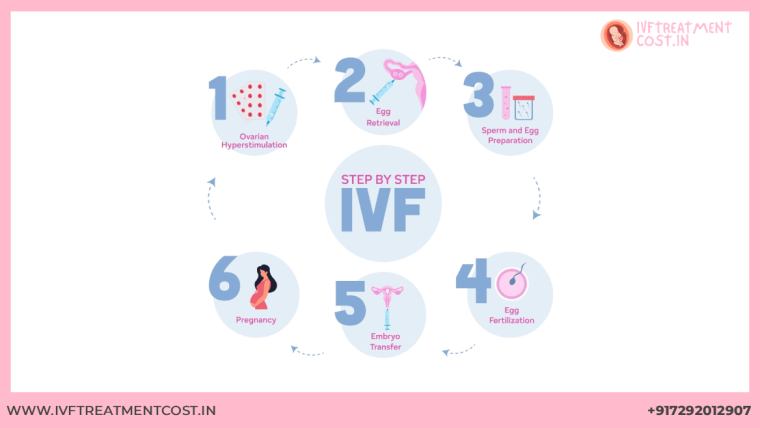
The IVF process for PCOS follows the same fundamental stages as standard IVF — ovarian stimulation, egg retrieval, fertilization, embryo culture, and embryo transfer — but with several important protocol modifications designed to maximise egg yield while minimising the risk of OHSS. During ovarian stimulation, fertility specialists typically use a GnRH antagonist protocol with lower starting doses of gonadotropins (often 100–150 IU per day instead of the standard 150–300 IU) because PCOS ovaries are hyper-responsive. Monitoring is more frequent, with blood estradiol levels and follicle measurements checked every one to two days. When the leading follicles reach 17–18 mm, a GnRH agonist trigger (such as leuprolide) is often preferred over the traditional hCG trigger because it dramatically reduces the risk of OHSS. After egg retrieval, many clinics recommend a freeze-all strategy — freezing all embryos and performing the transfer in a subsequent natural or medicated cycle — to further protect against late-onset OHSS. This approach has been shown in research to maintain or even improve pregnancy rates compared to fresh transfers in PCOS patients.
IVF Treatment for PCOS – Medication Protocol Differences
PCOS patients require a carefully tailored medication approach. The typical protocol includes a GnRH antagonist (cetrorelix or ganirelix) started on day five or six of stimulation, low-dose gonadotropins (recombinant FSH at 100–150 IU/day), estrogen monitoring to watch for hyperstimulation, a GnRH agonist trigger instead of hCG when estradiol exceeds 3,500 pg/ml, and progesterone supplementation during the luteal phase of a frozen embryo transfer cycle. Metformin is sometimes continued alongside stimulation medications to improve insulin sensitivity and egg quality. Some doctors also prescribe inositol (myo-inositol and D-chiro-inositol) as an adjunct to improve oocyte maturation rates. The freeze-all approach is increasingly standard for PCOS IVF cycles because it separates the stressful stimulation phase from the transfer phase, allowing the body to recover and the uterine lining to be optimally prepared in a subsequent cycle.
IVF Treatment for PCOS – Cost Breakdown in India
The cost of IVF treatment for PCOS in India ranges from ₹1,00,000 to ₹2,50,000 per cycle, depending on the city, clinic, and whether additional procedures are required. This cost typically includes the consultation and monitoring fees, ovarian stimulation medications (which may be slightly lower for PCOS due to reduced doses), egg retrieval procedure, embryology lab charges for fertilization and culture, and the embryo transfer. Additional costs may include ICSI (₹20,000–₹40,000), embryo freezing and storage (₹15,000–₹30,000 per year), frozen embryo transfer in a subsequent cycle (₹30,000–₹60,000), PGT-A genetic testing (₹40,000–₹80,000 per batch), and medications for a medicated FET cycle (₹5,000–₹15,000). Because PCOS patients often produce a large number of embryos, the freeze-all strategy is particularly cost-effective — frozen embryo transfers are significantly cheaper than repeating a full stimulation cycle. Many patients who freeze surplus embryos from their first retrieval can achieve two or three transfer attempts from a single egg collection, effectively reducing the per-attempt cost considerably.
Success Rate of IVF Treatment for PCOS by Age
The success rate of IVF treatment for PCOS is generally comparable to or slightly higher than standard IVF for age-matched patients, primarily because of the larger number of eggs retrieved. The key factor remains the woman’s age at the time of treatment. For women under 30 with PCOS, live birth rates per cycle typically range from 50% to 65%. Between 30 and 34, rates remain strong at 45% to 58%. For women aged 35 to 37, success rates are approximately 38% to 48%. Between 38 and 40, rates drop to 25% to 35%, and for women over 40, live birth rates fall to 12% to 22% with their own eggs. Cumulative success rates after three cycles are especially encouraging for PCOS patients under 35, often reaching 80% to 90%. One important advantage for PCOS patients is the ability to bank a large number of embryos from a single retrieval. This means that even if the first transfer does not succeed, subsequent frozen embryo transfers can be performed at relatively low cost and with minimal physical stress, significantly improving cumulative outcomes.
OHSS Risk & Prevention During IVF Treatment for PCOS
Ovarian hyperstimulation syndrome (OHSS) is the most serious medical risk associated with IVF treatment for PCOS. OHSS occurs when the ovaries over-respond to stimulation medications, leading to enlarged ovaries, fluid accumulation in the abdomen and chest, blood clotting risks, and in severe cases, kidney failure or respiratory distress. PCOS patients are at significantly higher risk because of their elevated antral follicle count and exaggerated response to gonadotropins. Modern PCOS-IVF protocols have reduced severe OHSS incidence to less than one to two percent through several evidence-based strategies: using a GnRH antagonist protocol instead of a long agonist protocol, starting with the lowest effective dose of gonadotropins and titrating upward slowly, triggering with a GnRH agonist instead of hCG when estradiol levels are elevated, freezing all embryos and delaying transfer (the freeze-all approach eliminates pregnancy-related hCG which worsens OHSS), prescribing cabergoline for three to five days after retrieval to reduce vascular permeability, and closely monitoring patients for early signs of OHSS in the days following retrieval.
“Polycystic ovary syndrome is not the end of the fertility journey — it is a detour. With the right medical team and the right protocol, PCOS patients can achieve outstanding IVF outcomes.”— Dr. Robert Edwards (attributed), Nobel Laureate & Pioneer of IVF
IVF Treatment for PCOS – Success Rate by Age
| Age | Live Birth Rate/Cycle | Cumulative (3 Cycles) | OHSS Risk |
|---|---|---|---|
| Under 30 | 50–65% | 82–92% | Higher (managed) |
| 30–34 | 45–58% | 75–88% | Moderate-High |
| 35–37 | 38–48% | 65–78% | Moderate |
| 38–40 | 25–35% | 48–62% | Lower |
| Over 40 | 12–22% | 28–42% | Lower |
IVF for PCOS – Cost Breakdown in India (₹)
| Component | Cost Range | Notes |
|---|---|---|
| Consultation & Monitoring | ₹5,000–₹15,000 | Blood tests + ultrasounds |
| Stimulation Medications | ₹30,000–₹80,000 | Lower doses for PCOS |
| Egg Retrieval | ₹25,000–₹50,000 | Day procedure under sedation |
| ICSI (if needed) | ₹20,000–₹40,000 | Recommended for male factor |
| Embryo Freezing | ₹15,000–₹30,000/yr | Essential for freeze-all |
| Frozen Embryo Transfer | ₹30,000–₹60,000 | Separate cycle |
| PGT-A (optional) | ₹40,000–₹80,000 | Per embryo batch |
“I was diagnosed with PCOS at 24 and spent years trying to conceive. After failed ovulation induction and two unsuccessful IUI attempts, we moved to IVF. My doctor used a low-dose antagonist protocol and triggered with a GnRH agonist to prevent OHSS. We retrieved twenty-two eggs, eighteen fertilised, and seven reached blastocyst stage. We froze all of them and did a medicated frozen embryo transfer the next month. The first transfer worked. I never developed OHSS, and our baby boy was born healthy at 38 weeks. IVF treatment for PCOS gave us the family we dreamed of.”
Research Paper Citations
1. Thessaloniki ESHRE/ASRM PCOS Consensus Workshop Group. “Consensus on infertility treatment related to PCOS.” Human Reproduction. 2008;23(3):462–477. This landmark consensus established that IVF is an appropriate third-line treatment for PCOS infertility after ovulation induction and IUI have failed.
2. Palomba S, et al. “Complications and challenges associated with polycystic ovary syndrome: current perspectives.” International Journal of Women’s Health. 2015;7:745–763. This review covers OHSS risk in PCOS patients and outlines modern prevention strategies including GnRH agonist triggering and freeze-all protocols.
3. Teede HJ, et al. “Recommendations from the 2023 international evidence-based guideline for the assessment and management of PCOS.” Fertility and Sterility. 2023;120(4):767–793. The most recent international guideline providing updated recommendations on PCOS management including the role of IVF.
Final Thoughts
The IVF treatment for PCOS journey may feel daunting, but the medical evidence is clear: PCOS patients who undergo IVF with modern, well-designed protocols have some of the highest success rates in assisted reproduction. The key is choosing a clinic experienced in managing PCOS-specific risks like OHSS, using a GnRH antagonist protocol with careful dose titration, considering a freeze-all strategy, and optimising your health through weight management, diet, exercise, and supplements like myo-inositol and folic acid before starting your cycle. If you have been diagnosed with PCOS and other treatments have not worked, IVF treatment for PCOS is a proven, effective path to parenthood. Talk to your fertility specialist about whether IVF is the right next step, and use the information in this guide to make an informed, confident decision about your care.
Frequently Asked Questions
References and Trusted Resources
- 1. ICMR National ART Registry — artsurrogacy.gov.in
- 2. PCOS Society of India — www.pcossociety.org
- 3. SART National Summary Report — www.sartcorsonline.com
- 4. CDC ART Success Rates — www.cdc.gov
- 5. ESHRE PCOS Guidelines 2023 — www.eshre.eu
- 6. Palomba S et al. Int J Women’s Health. 2015 — pmc.ncbi.nlm.nih.gov
- 7. Teede HJ et al. Fertil Steril. 2023;120(4) — pubmed.ncbi.nlm.nih.gov